
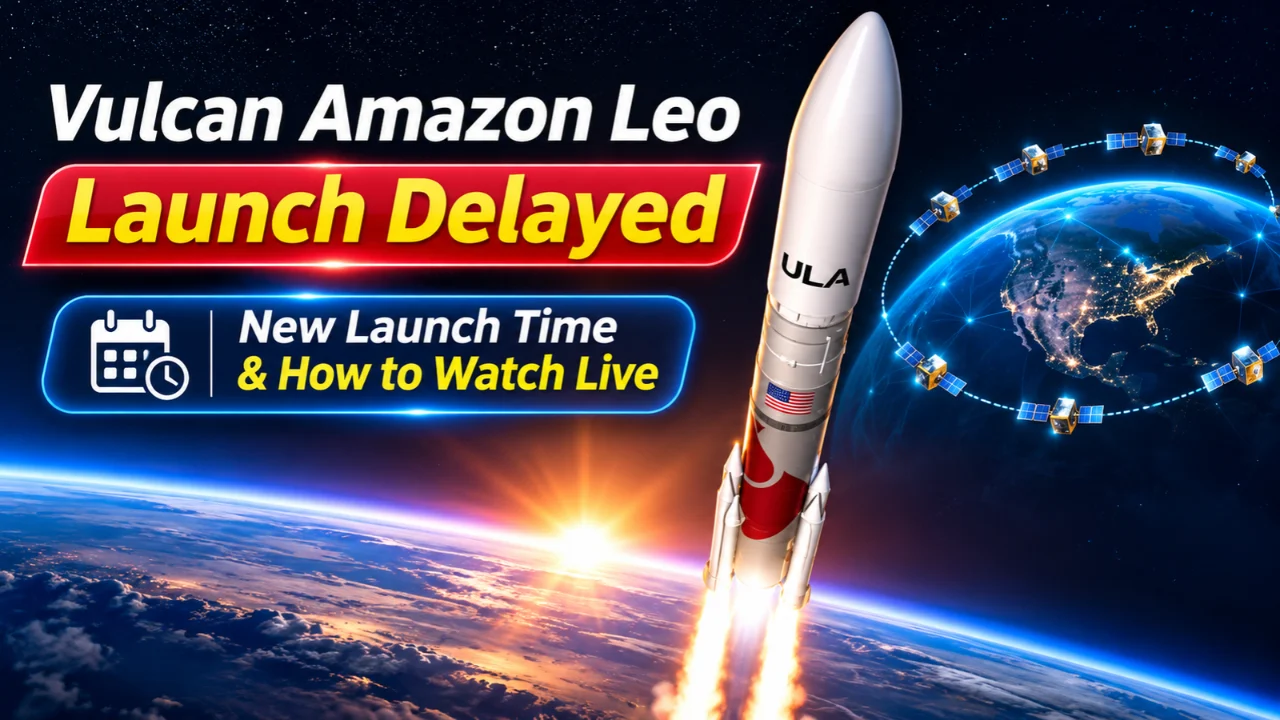
United Launch Alliance (ULA) has postponed the highly anticipated ULA Vulcan Amazon Leo launch after an unexpected power interruption affected a critical gaseous nitrogen supply facility supporting launch operations. The delay is not related to the rocket or its payload, and both the Vulcan rocket and its 40 Amazon Leo satellites remain in good health. The launch is now scheduled for Saturday, November 14, 2026, giving space enthusiasts another opportunity to watch one of the year’s most important commercial space missions.
The mission marks Vulcan’s return to flight after a nine-month pause and represents the first of 38 contracted Vulcan launches that will help deploy Amazon’s growing Leo broadband internet constellation. For U.S. readers, this mission is significant because it strengthens competition in satellite internet while also demonstrating the readiness of ULA’s next-generation launch vehicle.
Read Also-FAA Ground Stop: Aging Air-Traffic Tech Failed Nationwide
Why Was the ULA Vulcan Amazon Leo Launch Delayed?
The original launch attempt on Friday, November 13, was called off after a power interruption at the Air Liquide gaseous nitrogen plant caused the loss of high-pressure pumps required for launch operations.
According to ULA:
- The rocket is healthy.
- All 40 satellites remain healthy.
- The issue occurred with ground support infrastructure, not the launch vehicle.
- Engineers chose the backup launch opportunity rather than risk an incomplete countdown.
This means there are no reported technical issues with the Vulcan rocket itself or Amazon’s payload.
New Launch Window: Date, Time, and How to Watch
The updated ULA Vulcan Amazon Leo launch schedule is:
- Date: Saturday, November 14, 2026
- Launch Time: 12:32:30 p.m. EST (17:32 UTC)
- Launch Site: Space Launch Complex 41, Cape Canaveral Space Force Station, Florida
- Rocket: ULA Vulcan VC6L
- Payload: 40 Amazon Leo broadband satellites
How to Watch Live
U.S. viewers can follow the mission through:
- United Launch Alliance’s official livestream
- ULA’s live mission blog
- Coverage from major space news outlets including Spaceflight Now and Space.com.
Why This Mission Is Important for Amazon
This mission carries 40 Amazon Leo satellites, the largest single Amazon satellite payload launched so far.
Key facts include:
- 40 satellites aboard Vulcan
- First Amazon Leo mission using the Vulcan rocket
- First of 38 Vulcan launches purchased by Amazon
- Supports Amazon’s long-term plan for a constellation of more than 3,200 low-Earth-orbit satellites designed to provide broadband internet service.
Amazon has already launched several hundred satellites using Atlas V, Falcon 9, and Ariane 6, but Vulcan is expected to become one of the company’s primary launch vehicles over the coming years.
Read Also-Google TPU 8tx Unveiled: What Its Secure AI Chip Means for Nvidia
Why This Flight Matters for ULA
Beyond Amazon’s satellite deployment, this mission represents a critical milestone for ULA.
Earlier this year, Vulcan experienced a solid rocket booster nozzle anomaly during a U.S. Space Force mission. Although that mission successfully reached orbit, the rocket underwent months of investigation and engineering updates before returning to flight.
For this mission:
- Engineers implemented a redesigned booster nozzle
- Multiple manufacturing and design improvements were completed
- Flight data from this mission will help validate those changes before additional commercial and national security launches resume.
A successful launch would strengthen confidence in Vulcan as ULA’s flagship launch system for both commercial customers and U.S. government missions.
How to Prepare for Launch Day
If you’re planning to follow the ULA Vulcan Amazon Leo launch, here are a few simple steps:
- Visit the official ULA livestream about 20–30 minutes before liftoff.
- Check ULA’s mission updates for any last-minute weather or range changes.
- Convert the launch time to your local time zone if you’re outside the Eastern U.S.
- Follow trusted space news sources for live countdown coverage and post-launch analysis.
- Watch for satellite deployment approximately 70 minutes after liftoff, when the 40 Amazon Leo satellites begin separating into low Earth orbit.
Read Also-OpenAI Daybreak Red Team: How AI Agents Find and Fix Website Security Bugs