
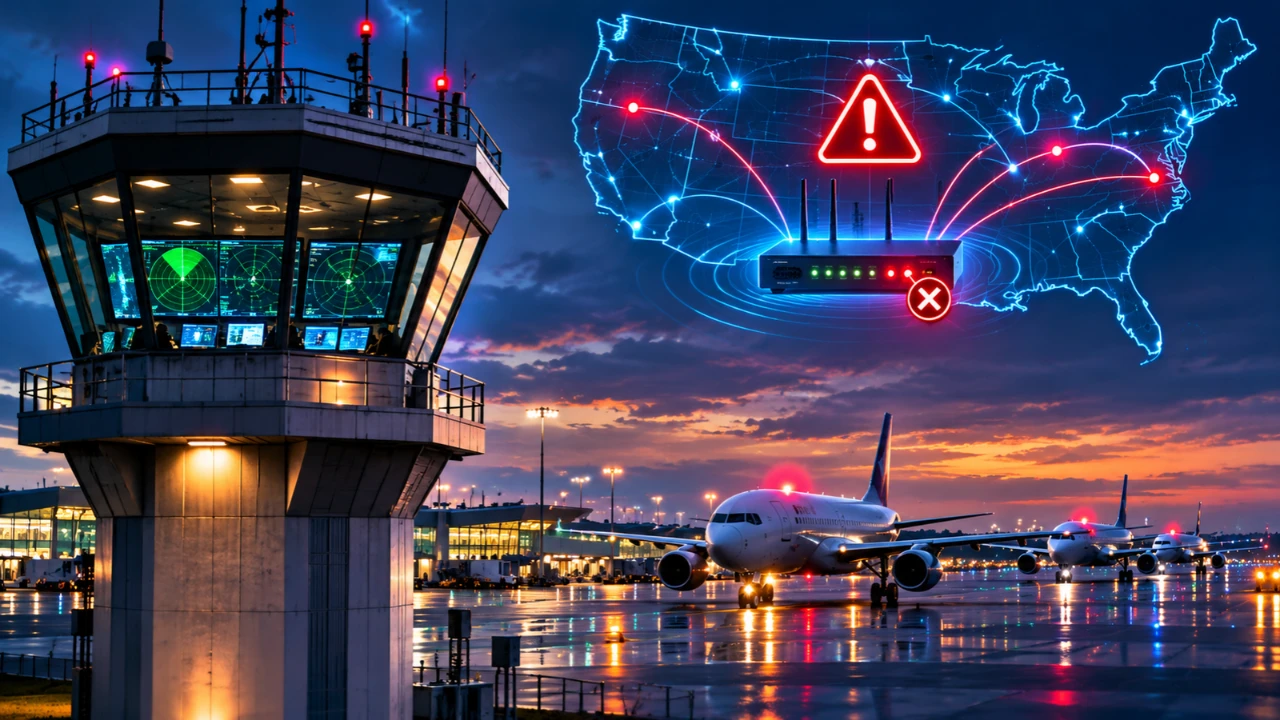
The FAA’s FAA ground stop technology failure halted departing flights across the United States on November 13 after communications and radar systems at air-traffic-control centers became unstable. Officials lifted the stop after roughly four hours, but the disruption left more than 10,000 flights delayed or canceled and renewed pressure for a full modernization of the nation’s aging aviation network.
FAA Ground Stop: Aging Air-Traffic Tech Failed-What Happened Today
The Federal Aviation Administration issued a nationwide FAA ground stop at about 4 p.m. Eastern Time, citing communication problems affecting multiple Air Route Traffic Control Centers, the regional facilities that guide aircraft during the high-altitude portion of flights.
The FAA described the event as an “extraordinary circumstance” and said it acted for safety. Planes already in the air could land, but departing aircraft were ordered to remain on the ground while technicians investigated the problem.
Transportation Secretary Sean Duffy said instability in radar and communications systems began at 3:36 p.m. ET. The FAA lifted the nationwide stop later that evening after testing confirmed that its systems were stable enough to resume departures.
Read Also-Google TPU 8tx Unveiled: What Its Secure AI Chip Means for Nvidia
Why the System Failed
Officials said the immediate problem involved overloaded switches and routers in the FAA’s legacy telecommunications network. As data moved through the system, the equipment began producing inconsistent readings, prompting the agency to shut down departures as a precaution.
Transportation Secretary Duffy said the affected infrastructure includes older switches, routers, and copper-based telecommunications lines technology he described as dating back decades. Homeland Security Secretary Markwayne Mullin said newly installed equipment and patches may have overwhelmed parts of the older system, although the exact root cause remains under investigation.
The FAA has not yet published a final technical explanation. Officials said there was no evidence of a cyberattack or improper access to FAA systems, while also noting that the investigation was still ongoing.
Why a Ground Stop Was Necessary
A nationwide FAA ground stop is one of the FAA’s most disruptive safety tools. It prevents new departures so controllers can manage the aircraft already airborne, avoid overloading airspace, and preserve reliable communication between pilots and controllers.
The issue affected the 22 regional Air Route Traffic Control Centers that manage flights between airports, not merely individual airport towers. That broad scope explains why the disruption spread from coast to coast rather than remaining confined to one region.
The FAA said it used an “abundance of caution.” In practical terms, inconsistent radar or communications data can make it harder to verify aircraft positions, issue instructions, and maintain safe separation between planes, so officials paused new takeoffs until confidence in the system returned.
Read Also-OpenAI Daybreak Red Team: How AI Agents Find and Fix Website Security Bugs
How Many Flights Were Affected
The disruption was substantial:
- The FAA ground stop lasted more than four hours.
- More than 10,000 flights were delayed or canceled during the event.
- By late Friday, FlightAware counted more than 7,700 canceled flights and more than 8,000 delays for flights within, into, or out of the United States.
- More than 2,000 flights were already canceled for Saturday, signaling that recovery would continue into the weekend.
For travelers, the most important point is that a lifted FAA ground stop does not mean schedules instantly return to normal. Airlines must reposition aircraft, crews, and passengers, which can create delays and cancellations for hours or days afterward.
What Modernization Could Fix
The failure highlights the difference between patching an old system and replacing it with a resilient, modern architecture. Officials said the FAA has begun upgrading parts of its network, but the older analog infrastructure still carries critical communications and radar data.
A modernized air-traffic-control system would need:
- Redundant communications paths, so a failure in one network does not disrupt nationwide operations.
- Modern digital routing and switching, with capacity designed for today’s data volume.
- Continuous system monitoring, allowing technicians to detect instability before it affects flight operations.
- Phased, tested upgrades, so new technology can be introduced without overloading legacy equipment.
- Cybersecurity and resilience safeguards, protecting critical aviation infrastructure even though officials found no evidence of an attack in this incident.
Mullin estimated that a complete overhaul could cost about $50 billion. Congress had previously appropriated $12.5 billion in 2025 to begin modernization, but officials said that funding is not enough for a full rebuild.
What U.S. Travelers Should Do
If you are flying today or this weekend, assume that delays and cancellations may continue even though the ground stop has ended. The FAA says it tested systems before allowing departures to resume, but airlines still need time to restore normal operations.
- Check your airline app first. Look for flight-status alerts, rebooking options, and gate changes before leaving for the airport.
- Check the FAA and airport status pages. The FAA’s official statement and airport social-media accounts are more reliable than unverified social posts.
- Do not cancel a hotel or rental car immediately. If your flight is delayed but not canceled, schedules can change quickly as airspace capacity recovers.
- Know your rebooking rights. If your flight is canceled, use the airline app or contact center promptly; popular alternate flights can fill quickly.
- Keep essential items in your carry-on. Medications, chargers, identification, and basic toiletries can make an unexpected overnight delay easier to manage.
What Happens Next
The FAA says technicians are continuing to investigate the communications issue. The immediate operational priority is restoring normal traffic flow, while the longer-term issue is whether Congress and the Transportation Department can accelerate a full replacement of the nation’s legacy air-traffic-control infrastructure.
For U.S. travelers, the lesson is clear: the country’s aviation system depends on technology that must work reliably at national scale. Until that modernization is complete, even a localized technical fault can quickly become a nationwide travel crisis.
Read Also-Jensen Huang Resigns From Nvidia: What Changes for AI Chips Now