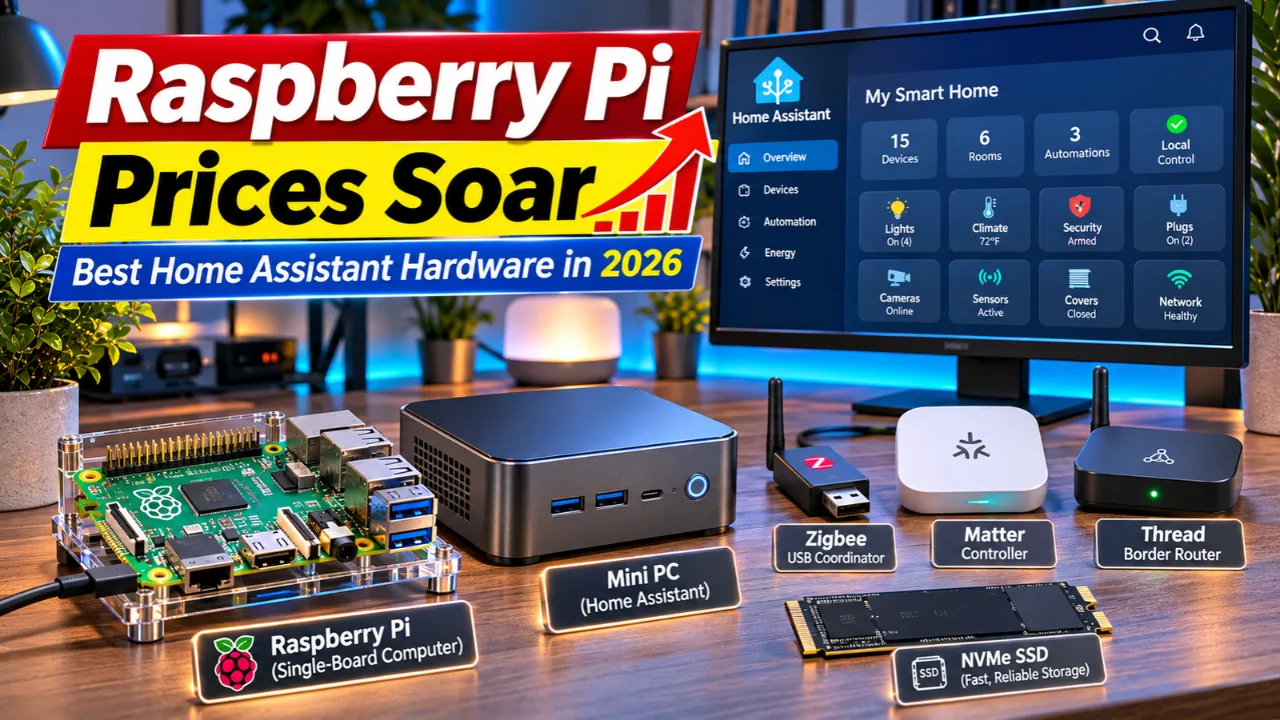
Anyone planning a new Home Assistant setup may want to rethink their hardware choice. The 16GB Raspberry Pi 5 has received another major price increase, climbing to $385 in the U.S., more than three times its original launch price. Raspberry Pi says the increase is being driven by the ongoing global shortage of 16GB DRAM, leaving many DIY smart home enthusiasts searching for more affordable alternatives.
The timing is especially important because Home Assistant adoption continues to grow across the United States, while the broader memory shortage often referred to by enthusiasts as “RAMageddon” is pushing prices higher for several computing platforms. If you’re planning a Home Assistant server today, there are now better-value options than simply buying the most expensive Raspberry Pi model.
Read Also-Best Early Black Friday Ring & Blink Deals: Buy Now or Wait?
Why Raspberry Pi 5 Prices Jumped Again
Raspberry Pi announced another round of pricing changes this week, increasing the 16GB Raspberry Pi 5 by $80, bringing its official price to $385.
According to Raspberry Pi CEO Eben Upton, the latest increase is caused by:
- Limited availability of 16GB DRAM
- Ongoing global memory shortages
- Higher component manufacturing costs
- Limited alternative memory suppliers
The company says lower-memory models remain available and continues to recommend buying only as much RAM as your projects actually require. Raspberry Pi also says the pricing changes are expected to be temporary once memory markets stabilize.
Do You Really Need a 16GB Raspberry Pi for Home Assistant?
For most Home Assistant users, the answer is no.
A typical smart home server spends much of its time handling:
- Device automation
- Zigbee and Thread communication
- Matter controllers
- Dashboards
- Notifications
- Add-ons
These workloads rarely require 16GB of memory.
Most homeowners running dozens or even hundreds of smart devices can comfortably operate Home Assistant on hardware with significantly less RAM, especially if they are not hosting multiple virtual machines or AI workloads alongside Home Assistant.
Best Home Assistant Hardware to Buy Right Now
If you’re building or upgrading a smart home server today, these options offer better value than purchasing the 16GB Raspberry Pi 5 at current prices.
1. Mini PCs (Best Overall Value)
Small Intel or AMD mini PCs have become the preferred choice for many Home Assistant users.
Advantages include:
- Faster processors
- NVMe SSD support
- More RAM options
- Lower cost per performance
- Better upgradeability
For users running Home Assistant with multiple add-ons, mini PCs now deliver substantially better long-term value than premium Raspberry Pi models approaching desktop PC prices.
Read Also-SmartThings Home Assistant Changes: What to Do Before Dec. 15, 2026
2. Raspberry Pi 5 (4GB or 8GB)
Not every Raspberry Pi model has become prohibitively expensive.
The 4GB and 8GB versions continue to provide a solid balance of performance, energy efficiency, and compatibility for many Home Assistant installations.
They’re particularly well suited for:
- Matter controllers
- Zigbee coordinators
- Small-to-medium smart homes
- Energy monitoring
- Local automations
3. Older Raspberry Pi Models
If you already own a Raspberry Pi 4 or Raspberry Pi 400, there’s little reason to upgrade solely because of Home Assistant.
Many existing installations continue to perform reliably on older hardware, especially when paired with an SSD instead of a microSD card.
4. Refurbished or Used Mini Computers
The growing second-hand PC market has become another attractive option.
Many refurbished business desktops offer:
- More processing power
- Expandable storage
- Better multitasking
- Competitive pricing
For DIY enthusiasts, these systems often cost less than a high-memory Raspberry Pi while providing significantly greater performance.
Should You Wait Before Buying?
If your project specifically requires the 16GB Raspberry Pi 5, waiting could be worthwhile.
Raspberry Pi says the current pricing reflects temporary supply conditions and that it hopes to reduce prices once memory availability improves. However, industry analysts continue to warn that DRAM supply could remain tight for several more years, meaning prices may not return to previous levels anytime soon.
For users who simply want a reliable Home Assistant server, delaying a purchase may not be necessary because several lower-cost alternatives are already available.
How to Choose the Right Home Assistant Hardware
Before buying new hardware, follow these steps:
- Count how many smart devices you currently use.
- Decide whether you’ll run add-ons, backups, or media services.
- Compare the cost of a Raspberry Pi with an entry-level mini PC.
- Consider local connectivity using Matter, Thread, and Zigbee.
- If your needs are modest, a lower-memory Raspberry Pi or refurbished mini PC may provide the best overall value.
The latest Raspberry Pi 5 price increase is another reminder that the global memory shortage continues to affect consumers well beyond traditional computers. While the 16GB model remains an excellent single-board computer, its current price makes it difficult to justify for many Home Assistant projects.
For most smart home enthusiasts, today’s best value comes from mini PCs, lower-memory Raspberry Pi models, or refurbished business hardware. Unless your installation genuinely requires 16GB of RAM, you’ll likely achieve better performance per dollar by choosing one of these alternatives while waiting for memory prices to stabilize.
Read Also-Home Assistant Marketplace Is Here: Migrate from HACS Today