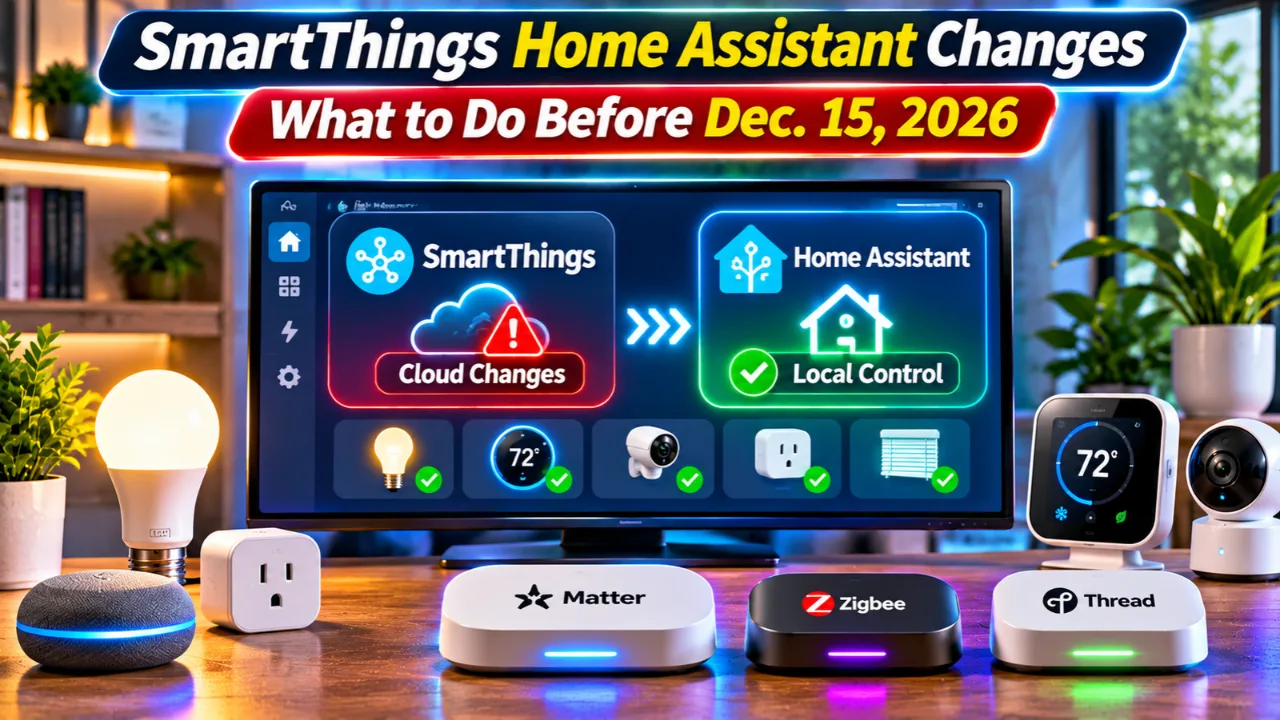
If you use SmartThings with Home Assistant, an important change is coming that could interrupt your smart home automations. Samsung has confirmed that the current SmartThings integration will stop working after December 15, 2026, and users who want to continue using the cloud integration will need to migrate to a new integration that requires the SmartThings API Developer Plan, priced at $4.99 per month for individual developers.
The timing is especially significant because Home Assistant Community Day is taking place today with 97 community meetups worldwide, putting additional attention on local-first smart home solutions and migration planning. For many users, the next few weeks will determine whether they continue with SmartThings’ cloud API or begin moving devices to local protocols like Matter, Zigbee, and Thread.
Read Also-Ocarina of Time Switch 2 Controls Just Got Better With Pro Controller
Why the SmartThings Integration Is Changing
Samsung recently introduced a new API pricing model designed for developers and business partners. Under the new system, Home Assistant’s updated SmartThings integration will rely on the paid Developer Plan, replacing the current free integration.
According to Samsung, key dates include:
- November 4, 2026: Developer Plan becomes available.
- December 2, 2026: Home Assistant is expected to release the new SmartThings integration.
- December 15, 2026: Existing SmartThings integration stops working.
Users who continue relying on the old integration after the deadline may lose communication between SmartThings and Home Assistant until they migrate.
What the $4.99 Developer Plan Includes
For individual users, Samsung’s Developer Plan currently includes:
- $4.99 monthly subscription
- Up to 100,000 API calls per month
- Support for up to 10 installed apps
- API usage dashboard
- Near real-time events using Server-Sent Events (SSE)
Samsung says the SmartThings mobile app, local Edge drivers, and normal SmartThings automations remain free. The paid plan specifically affects cloud API access used by integrations such as Home Assistant.
Read Also-GameMill Games Are Being Delisted: Buy Before They’re Gone?
Should You Pay or Move to Local Smart Home Standards?
Many Home Assistant users are now asking whether it’s worth paying for the cloud integration or moving devices to local control.
Staying with SmartThings
Advantages include:
- Existing SmartThings ecosystem remains intact.
- Samsung appliances continue working through official integrations.
- Less migration work for current users.
Moving to Local Control
Many enthusiasts are instead choosing local technologies such as:
- Matter
- Zigbee
- Thread
These protocols allow compatible devices to communicate locally through Home Assistant, reducing dependence on cloud services while improving speed, privacy, and reliability. Devices already connected through SmartThings may require re-pairing if migrated to a local coordinator.
Migration Checklist Before December 15
To avoid interruptions, Home Assistant users should prepare early.
If keeping SmartThings:
- Subscribe to the SmartThings Developer Plan.
- Update Home Assistant after the December release.
- Remove the existing SmartThings integration.
- Re-add the new SmartThings integration.
- Create the required Personal Access Token (PAT).
- Verify that devices and automations are functioning correctly.
If moving away from SmartThings:
- Identify devices that already support Matter, Zigbee, or Thread.
- Decide which devices should be paired directly with Home Assistant.
- Back up existing automations before making changes.
- Test migrated devices one room at a time to minimize disruption.
Why This Matters for Smart Home Users
The announcement highlights a broader trend across the smart home industry growing interest in local-first automation instead of cloud-dependent platforms.
For users heavily invested in Samsung appliances, paying the monthly fee may be the simplest option. Others may see this as the right time to transition toward Matter-compatible ecosystems that reduce recurring costs and cloud dependency.
With just weeks remaining before the December deadline, planning your migration now can help avoid unexpected disruptions to lights, sensors, switches, and automations.
How to Prepare Today
- Check whether your Home Assistant setup currently uses the SmartThings integration.
- Decide whether you want to pay for the Developer Plan or migrate devices locally.
- Make a backup of your Home Assistant configuration.
- Watch for the Home Assistant December release.
- Complete your migration before December 15, 2026.
Read Also-Home Assistant Marketplace Is Here: Migrate from HACS Today