
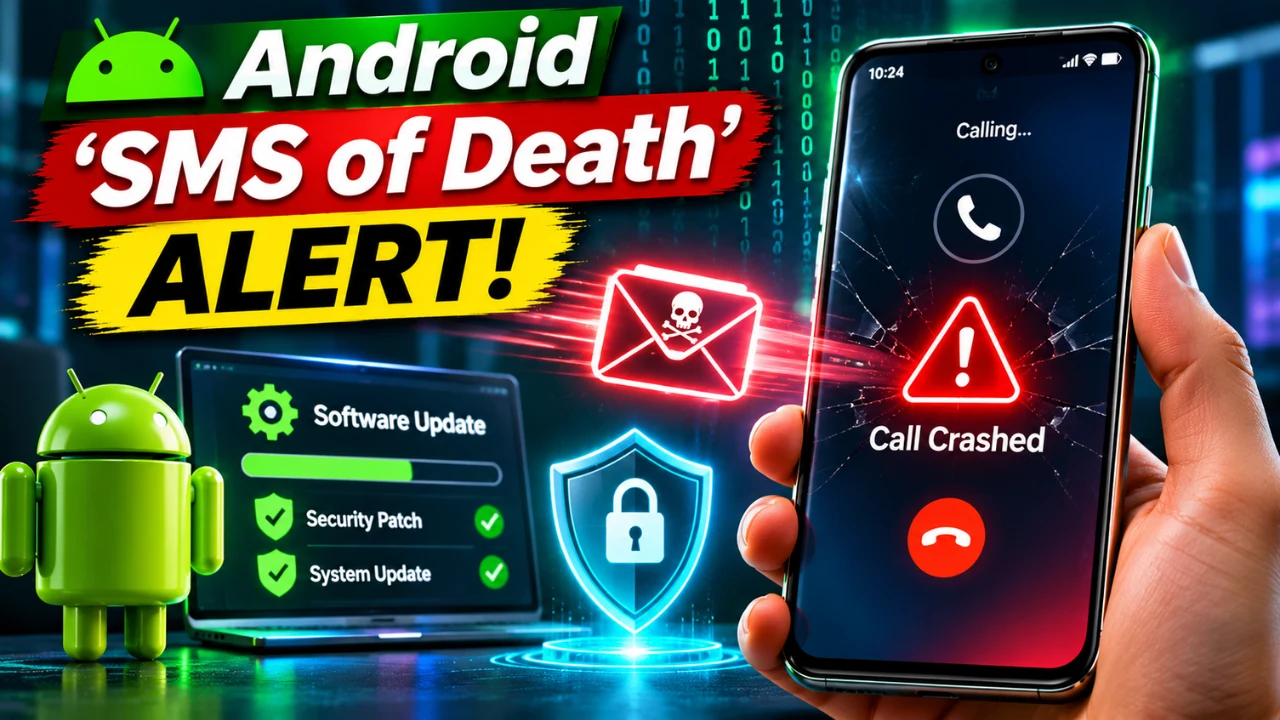
Android users are being urged to check for the latest security updates after researchers publicly disclosed a newly patched vulnerability nicknamed “SMS of Death.” The flaw can remotely crash an affected Android phone simply by sending a specially crafted invisible text message no tapping, downloading, or user interaction required. With proof-of-concept exploit code now publicly available, the issue has quickly become one of the most closely watched Android security stories of the week.
The vulnerability, tracked as CVE-2026-58882, is a zero-click denial-of-service (DoS) flaw. While there is currently no evidence of widespread attacks in the wild, security experts recommend installing the latest Android security update immediately, especially for supported devices.
Read Also-Xbox Cloud Gaming Changes Go Live: What Players Need to Know
What Is the ‘SMS of Death’ Vulnerability?
Unlike traditional phishing texts, the “SMS of Death” attack doesn’t require victims to open a message or click a malicious link.
Researchers found that Android incorrectly processes a specially crafted WAP Push data SMS. Instead of appearing in the Messages app, the invisible message is handled automatically by Android’s telephony framework. On vulnerable devices, processing the malformed message can crash the com.android.phone system process responsible for mobile connectivity.
Potential effects include:
- Dropped phone calls
- Temporary loss of cellular service
- Interrupted emergency calls
- Repeated crashes
- Possible reboot loops after multiple malicious messages
Importantly, this vulnerability is not designed to steal passwords, banking information, or personal files. Its primary impact is disrupting phone functionality rather than accessing private data.
Which Android Phones Are Affected?
According to published research, the vulnerable code exists across multiple Android versions.
Current information indicates:
- Android 14–17: Google has released a fix through the October 2026 security updates for supported devices.
- Android 12 and Android 13: Many devices may remain vulnerable if they no longer receive security updates from their manufacturer.
Researchers successfully reproduced the issue on Google Pixel and Samsung Galaxy smartphones, although the vulnerability affects Android itself rather than a single hardware brand.
For U.S. consumers, whether your phone is protected depends largely on:
- Your Android version
- Your device manufacturer’s update schedule
- Your installed Android security patch level
Why This Matters for U.S. Android Users
The biggest concern is that the attack happens silently.
Because the malicious SMS never appears in the inbox, users receive:
- No notification
- No warning message
- No suspicious sender
- No action prompt
Instead, the phone may suddenly lose service or disconnect an active call. In testing, repeated malicious messages could cause persistent crashes that were difficult for average users to recover from without technical tools.
Fortunately, researchers have not reported active large-scale attacks exploiting this flaw. However, the public release of demonstration code increases the importance of installing available security updates as soon as possible.
How Google Responded
Security researcher Mark Blaszczyk privately reported the vulnerability to Google earlier this year before later publishing technical details and a proof-of-concept demonstration.
Google had already developed a software fix before the public disclosure. The update improves how Android handles malformed WAP Push messages by preventing repeated crashes and removing malicious messages instead of continually attempting to process them.
Because Android updates are distributed through phone manufacturers and wireless carriers, not every eligible device receives security patches at the same time. That means some users may still be waiting for the latest update even if Google has already released the fix.
Read Also-Apple iPhone Duo Gets Major Attention: What Buyers Should Know
How to Protect Your Android Phone
If you’re using an Android phone in the U.S., follow these steps today:
- Open Settings → Security → System Update (or Software Update, depending on your device).
- Install the latest Android security update, especially if your phone supports Android 14 or newer.
- Restart your device after the update finishes.
- Verify your security patch level is October 2026 or newer if available for your device.
- If your phone no longer receives security updates, consider upgrading to a supported device for continued protection against newly discovered vulnerabilities.
Final Thoughts
The “SMS of Death” vulnerability is a reminder that even invisible system messages can expose smartphones to unexpected risks. Although the flaw is classified as a denial-of-service issue rather than a data-stealing attack, its ability to silently interrupt calls including emergency calls makes it a serious concern for affected Android users. The good news is that Google has already released a fix for supported Android versions, making timely software updates the most effective defense. If your phone has a pending security update, now is the right time to install it.